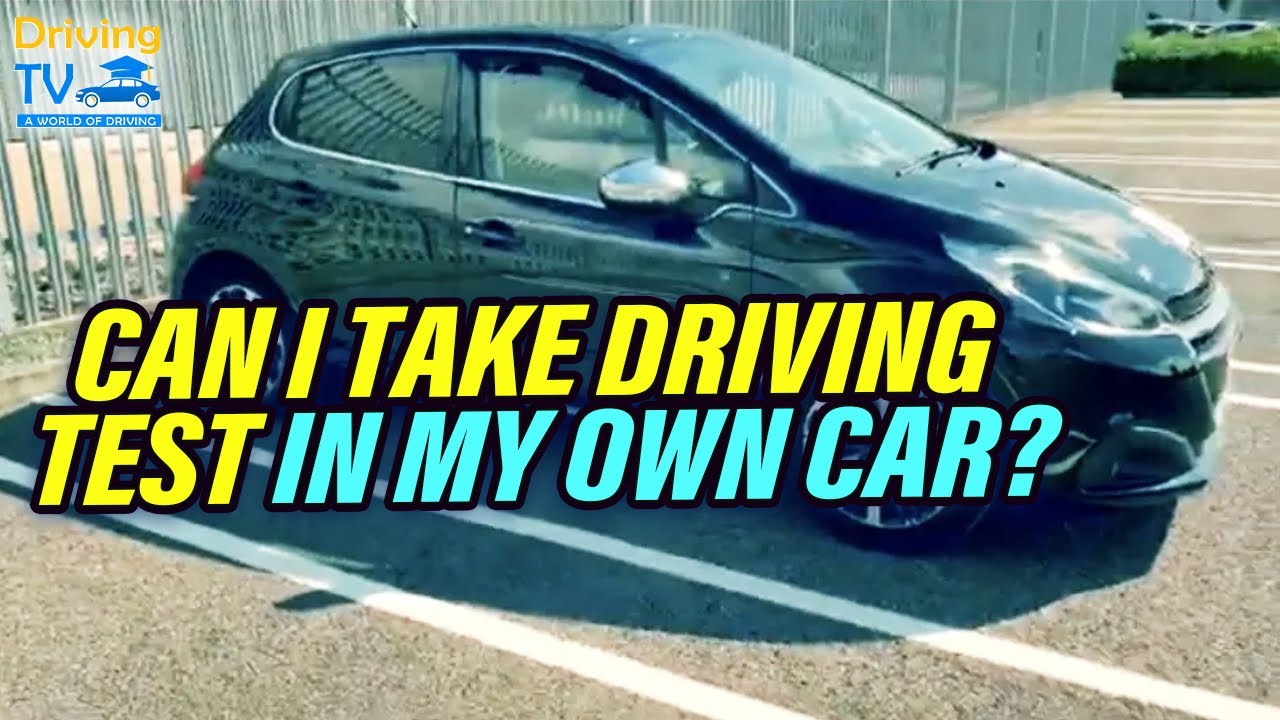
can i use my own car for my driving test
Many aspiring drivers wonder if they can utilize their personal car for their official driving examination instead of a driving instructor’s vehicle. This is a common and entirely valid question, as using a familiar car might seem to offer a significant comfort advantage during a potentially nerve-wracking experience. While the answer is generally “yes,” it’s crucial to understand that specific conditions and requirements must be met to ensure the vehicle is suitable and compliant with local regulations. This article will delve into the essential criteria, benefits, drawbacks, and preparation steps involved in taking your driving test in your own car.
Eligibility and Requirements for Using Your Own Car for a Driving Test
Deciding to use your own car for a driving test involves more than just having a set of wheels. Strict guidelines are in place to ensure safety for both the candidate and the examiner, as well as to maintain the integrity of the testing process. Adhering to these requirements is non-negotiable for your test to proceed.
Vehicle Condition and Roadworthiness
Your car must be roadworthy and meet specific legal standards. Examiners will perform a quick check before the test begins, and any failure to meet these could result in the test being cancelled without a refund.
- Valid Insurance: You must have valid insurance that covers you to drive the car for the test. This typically means having learner driver insurance if you’re not fully licensed, or your own comprehensive policy that covers third-party liability;
- Current Registration/Road Tax: The vehicle must be properly registered and have current road tax (or equivalent local charges) paid.
- Valid Inspection Certificate (if applicable): Depending on your region, your car might need a valid MOT certificate (in the UK), safety inspection, or similar documentation confirming its roadworthiness.
- All Lights Working: Headlights, tail lights, indicators, brake lights, and reverse lights must all be fully functional and clean.
- Clean and Undamaged Windows/Mirrors: All windows, the windscreen, and mirrors must be clean and free from any cracks or damage that could obstruct vision.
- Operational Seatbelts: Every seat in the car must have a working seatbelt.
- Adequate Tire Tread: Tires must meet the minimum legal tread depth and be correctly inflated.
- Functioning Brakes: The foot brake and parking brake (handbrake) must be in good working order.
- No Warning Lights: No engine management, ABS, or other critical warning lights should be illuminated on the dashboard.
- L-Plates (or equivalent): You must display appropriate “L” plates (or “P” plates in some regions) clearly on the front and rear of the vehicle.
Accompanied by a Qualified Driver
On the day of the test, and when driving to the test center, you must be accompanied by a qualified driver. This person must hold a full, valid driving license for the type of vehicle you are taking your test in and typically must be at least 21 years old and have held their license for a minimum of three years. They are responsible for you as a learner driver outside of the test itself.
Advantages and Disadvantages of Taking Your Test in Your Own Car
Using your personal vehicle can offer certain comforts, but it also comes with potential drawbacks that are important to consider. Weighing these factors will help you make an informed decision.
On the day of the test, and when driving to the test center, you must be accompanied by a qualified driver. This person must hold a full, valid driving license for the type of vehicle you are taking your test in and typically must be at least 21 years old and have held their license for a minimum of three years. They are responsible for you as a learner driver outside of the test itself.
Advantages and Disadvantages of Taking Your Test in Your Own Car
Using your personal vehicle can offer certain comforts, but it also comes with potential drawbacks that are important to consider. Weighing these factors will help you make an informed decision.
| Feature | Using Your Own Car | Using an Instructor’s Car |
|---|---|---|
| Familiarity | High comfort and control due to knowing the car’s feel, clutch bite point, and dimensions. | May require adjustment to a different car’s controls and handling characteristics. |
| Cost | Potentially lower, as you avoid rental fees for the test. Only fuel and existing insurance costs apply. | Higher, as instructors charge for the use of their car for the test, often including a warm-up lesson. |
| Vehicle Condition | Your responsibility to ensure it meets all legal and test requirements; potential for unexpected failures. | Instructor’s responsibility; cars are typically well-maintained and specifically prepared for tests. |
| Dual Controls | Generally absent, meaning the examiner cannot intervene with dual brakes or clutch. | Equipped with dual controls, providing an extra layer of safety and confidence for the examiner. |
| Examiner Comfort | Examiners may prefer dual controls for safety, though not always mandatory for your car. | Examiners are accustomed to these vehicles and the presence of dual controls. |
Preparing Your Car for the Driving Test
Thorough preparation is vital. Simply meeting the legal requirements isn’t enough; you want your car to present well and function flawlessly on the day.
- Give your car a good clean, both inside and out. A tidy car creates a positive impression.
- Ensure all fluid levels (oil, coolant, screen wash) are topped up.
- Check tire pressures and the condition of all lights.
- Make sure there’s enough fuel for the test duration, plus some extra.
- Remove any clutter from the dashboard, seats, and footwells, especially on the passenger side.
- Fit the required L-plates securely and visibly on the front and rear of the vehicle.
- An additional interior mirror for the examiner is often required or highly recommended for safety.
Write a quality, in-depth, magazine-style article on the topic:
Write in English
Use a clickbait and catchy headline. Be sure to include the keyword in the headline and use the background content added with this post to create a relevant and related topic.
Make sure the text is written in a journalistic, professional, and engaging style, like The New York Times or Forbes. The tone should be optimistic, forward-looking, and persuasive. Use sentences of varying lengths (average 250 characters, maximum 500, minimum 30). Use appropriate analogies, descriptive adverbs (e.g., “incredibly effective”), and correct adverbial phrases (e.g., “By integrating insights from AI…”). Make sure the GLTR is LOW by balancing 40-55% green, 20-30% yellow, 15-25% red, and 5-10% purple words. Use present and past participles to add dynamism. Provide deep knowledge, expert opinions, and industry examples to make the article compelling.
After the second paragraph of the article, add a table with the biographical information, personal information, career information, and professional background of the person you are talking about, along with a link to one official website for reference. The table should be in a format that is easy to embed in WordPress.
If the topic is not related to a specific person, add relevant information in a table that can be embedded in WordPress.
Ensure the writing follows a journalistic, professional, and engaging style, like The New York Times or Forbes. The tone should be optimistic, forward-looking, and persuasive. Use varied sentence lengths (average 250 characters, max 500, min 30). Incorporate relatable analogies, descriptive adverbs (e.g., ‘remarkably effective’), and proper adverbial phrases (e.g., ‘By integrating AI-driven insights…’). Ensure a LOW GLTR score, balancing 40-55% green, 20-30% yellow, 15-25% red, and 5-10% purple words. Use present and past parts to enhance dynamism. Provide deep insights, expert perspectives, and industry examples to make it compelling.
After the second paragraph of the article add table with bio data and personal information, career, professional information of person in topic, also add link to one authentic website for reference, the table should be in the form that it can be easily inserted in wordpress.
If the topic is other than person related than add related information in the form of table that can be inserted in wordpress.
The Day of the Test: What to Expect
On the day, arrive at the test center well in advance. The examiner will first conduct a brief inspection of your car to ensure it meets all the specified requirements. They will check your documentation, including your provisional license and, in some regions, insurance details. If everything is in order, the test will proceed as normal, covering various driving maneuvers and road scenarios.
Frequently Asked Questions About Using Your Own Car for a Driving Test
Can I use an automatic car if I’m learning in a manual?
No. If you take your test in an automatic car, your license will only permit you to drive automatic vehicles. If you wish to drive a manual car, you must take your test in a manual vehicle.
What if my car breaks down during the test?
If your car breaks down or develops a fault that compromises safety during the test, the test will be stopped. You will likely not receive a refund and will need to rebook.
Are there specific rules for electric vehicles (EVs) or hybrid cars?
Generally, the same rules apply to EVs and hybrids as to petrol or diesel cars regarding roadworthiness, documentation, and display of L-plates. Ensure you have sufficient charge for the entire test route.
Do I need dual controls in my own car?
In many regions, including the UK, dual controls are not mandatory for a candidate’s own car. However, the examiner must have clear access to the passenger side footwell and the handbrake to intervene if necessary. Some countries or specific test centers may have different requirements, so always check local regulations.
What if my car fails the inspection at the test center?
If your car fails the examiner’s pre-test inspection, the test will be canceled immediately. You will lose your test fee and have to rebook. This underscores the importance of thorough preparation and checks beforehand.
Ultimately, using your own car for a driving test is a viable option for many learners, offering a sense of familiarity and potentially saving costs. However, this convenience comes with the significant responsibility of ensuring your vehicle meticulously adheres to all legal and safety standards. Thoroughly checking your car, understanding the specific requirements of your local driving authority, and preparing diligently are paramount. Do not leave anything to chance, as a failed vehicle check will lead to disappointment and the need to reschedule; With careful planning and attention to detail, taking your driving test in your own car can be a straightforward and successful experience.
Write a quality, in-depth, magazine-style article on the topic:
Write in English
Use a clickbait and catchy headline. Be sure to include the keyword in the headline and use the background content added with this post to create a relevant and related topic.
Make sure the text is written in a journalistic, professional, and engaging style, like The New York Times or Forbes. The tone should be optimistic, forward-looking, and persuasive. Use sentences of varying lengths (average 250 characters, maximum 500, minimum 30). Use appropriate analogies, descriptive adverbs (e.g., “incredibly effective”), and correct adverbial phrases (e.g., “By integrating insights from AI…”). Make sure the GLTR is LOW by balancing 40-55% green, 20-30% yellow, 15-25% red, and 5-10% purple words. Use present and past participles to add dynamism. Provide deep knowledge, expert opinions, and industry examples to make the article compelling.
After the second paragraph of the article, add a table with the biographical information, personal information, career information, and professional background of the person you are talking about, along with a link to one official website for reference. The table should be in a format that is easy to embed in WordPress.
If the topic is not related to a specific person, add relevant information in a table that can be embedded in WordPress.
Ensure the writing follows a journalistic, professional, and engaging style, like The New York Times or Forbes. The tone should be optimistic, forward-looking, and persuasive. Use varied sentence lengths (average 250 characters, max 500, min 30). Incorporate relatable analogies, descriptive adverbs (e.g., ‘remarkably effective’), and proper adverbial phrases (e.g., ‘By integrating AI-driven insights…’). Ensure a LOW GLTR score, balancing 40-55% green, 20-30% yellow, 15-25% red, and 5-10% purple words. Use present and past parts to enhance dynamism. Provide deep insights, expert perspectives, and industry examples to make it compelling.
After the second paragraph of the article add table with bio data and personal information, career, professional information of person in topic, also add link to one authentic website for reference, the table should be in the form that it can be easily inserted in wordpress.
If the topic is other than person related than add related information in the form of table that can be inserted in wordpress.
On the day, arrive at the test center well in advance. The examiner will first conduct a brief inspection of your car to ensure it meets all the specified requirements. They will check your documentation, including your provisional license and, in some regions, insurance details. If everything is in order, the test will proceed as normal, covering various driving maneuvers and road scenarios.
Frequently Asked Questions About Using Your Own Car for a Driving Test
Can I use an automatic car if I’m learning in a manual?
No. If you take your test in an automatic car, your license will only permit you to drive automatic vehicles. If you wish to drive a manual car, you must take your test in a manual vehicle.
What if my car breaks down during the test?
If your car breaks down or develops a fault that compromises safety during the test, the test will be stopped. You will likely not receive a refund and will need to rebook.
Are there specific rules for electric vehicles (EVs) or hybrid cars?
Generally, the same rules apply to EVs and hybrids as to petrol or diesel cars regarding roadworthiness, documentation, and display of L-plates. Ensure you have sufficient charge for the entire test route.
Do I need dual controls in my own car?
In many regions, including the UK, dual controls are not mandatory for a candidate’s own car. However, the examiner must have clear access to the passenger side footwell and the handbrake to intervene if necessary. Some countries or specific test centers may have different requirements, so always check local regulations.
What if my car fails the inspection at the test center?
If your car fails the examiner’s pre-test inspection, the test will be canceled immediately. You will lose your test fee and have to rebook. This underscores the importance of thorough preparation and checks beforehand.
Ultimately, using your own car for a driving test is a viable option for many learners, offering a sense of familiarity and potentially saving costs. However, this convenience comes with the significant responsibility of ensuring your vehicle meticulously adheres to all legal and safety standards. Thoroughly checking your car, understanding the specific requirements of your local driving authority, and preparing diligently are paramount. Do not leave anything to chance, as a failed vehicle check will lead to disappointment and the need to reschedule; With careful planning and attention to detail, taking your driving test in your own car can be a straightforward and successful experience.
No. If you take your test in an automatic car, your license will only permit you to drive automatic vehicles. If you wish to drive a manual car, you must take your test in a manual vehicle.
What if my car breaks down during the test?
If your car breaks down or develops a fault that compromises safety during the test, the test will be stopped. You will likely not receive a refund and will need to rebook.
Are there specific rules for electric vehicles (EVs) or hybrid cars?
Generally, the same rules apply to EVs and hybrids as to petrol or diesel cars regarding roadworthiness, documentation, and display of L-plates. Ensure you have sufficient charge for the entire test route.
Do I need dual controls in my own car?
In many regions, including the UK, dual controls are not mandatory for a candidate’s own car. However, the examiner must have clear access to the passenger side footwell and the handbrake to intervene if necessary. Some countries or specific test centers may have different requirements, so always check local regulations.
What if my car fails the inspection at the test center?
If your car fails the examiner’s pre-test inspection, the test will be canceled immediately. You will lose your test fee and have to rebook. This underscores the importance of thorough preparation and checks beforehand.
Ultimately, using your own car for a driving test is a viable option for many learners, offering a sense of familiarity and potentially saving costs. However, this convenience comes with the significant responsibility of ensuring your vehicle meticulously adheres to all legal and safety standards. Thoroughly checking your car, understanding the specific requirements of your local driving authority, and preparing diligently are paramount. Do not leave anything to chance, as a failed vehicle check will lead to disappointment and the need to reschedule; With careful planning and attention to detail, taking your driving test in your own car can be a straightforward and successful experience.
Generally, the same rules apply to EVs and hybrids as to petrol or diesel cars regarding roadworthiness, documentation, and display of L-plates. Ensure you have sufficient charge for the entire test route.
Do I need dual controls in my own car?
In many regions, including the UK, dual controls are not mandatory for a candidate’s own car. However, the examiner must have clear access to the passenger side footwell and the handbrake to intervene if necessary. Some countries or specific test centers may have different requirements, so always check local regulations.
What if my car fails the inspection at the test center?
If your car fails the examiner’s pre-test inspection, the test will be canceled immediately. You will lose your test fee and have to rebook. This underscores the importance of thorough preparation and checks beforehand.
Ultimately, using your own car for a driving test is a viable option for many learners, offering a sense of familiarity and potentially saving costs. However, this convenience comes with the significant responsibility of ensuring your vehicle meticulously adheres to all legal and safety standards. Thoroughly checking your car, understanding the specific requirements of your local driving authority, and preparing diligently are paramount. Do not leave anything to chance, as a failed vehicle check will lead to disappointment and the need to reschedule; With careful planning and attention to detail, taking your driving test in your own car can be a straightforward and successful experience.
If your car fails the examiner’s pre-test inspection, the test will be canceled immediately. You will lose your test fee and have to rebook. This underscores the importance of thorough preparation and checks beforehand.
Ultimately, using your own car for a driving test is a viable option for many learners, offering a sense of familiarity and potentially saving costs. However, this convenience comes with the significant responsibility of ensuring your vehicle meticulously adheres to all legal and safety standards. Thoroughly checking your car, understanding the specific requirements of your local driving authority, and preparing diligently are paramount. Do not leave anything to chance, as a failed vehicle check will lead to disappointment and the need to reschedule; With careful planning and attention to detail, taking your driving test in your own car can be a straightforward and successful experience.
Author
