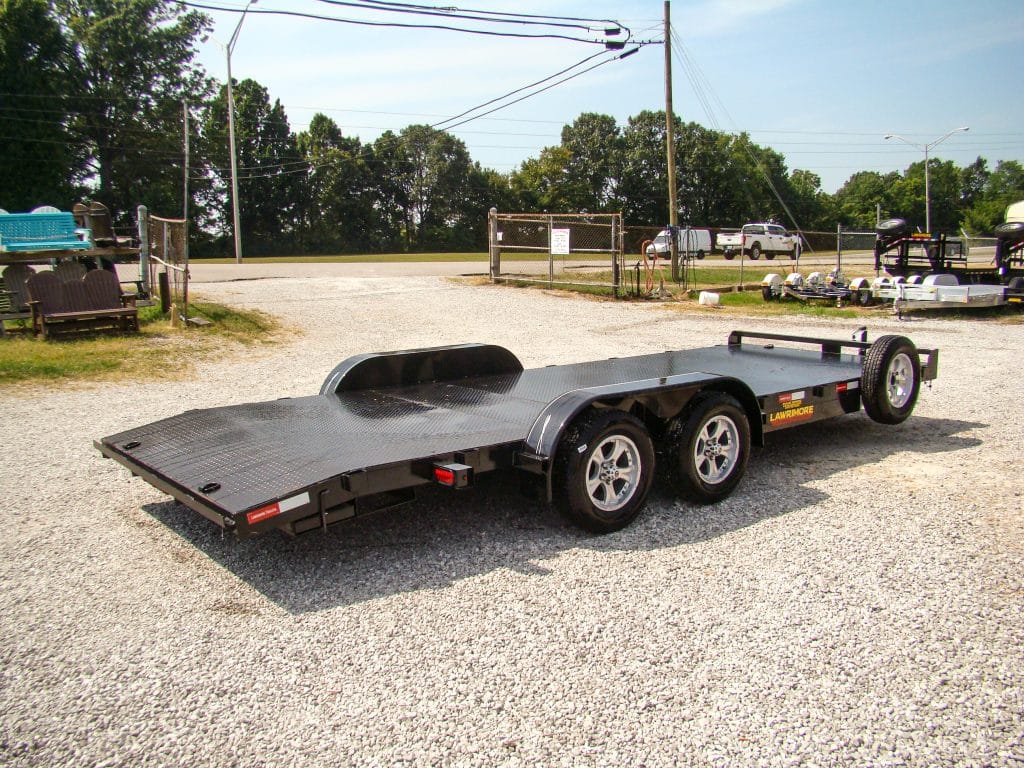
How Much Do Car Trailers Weigh
Car trailers are indispensable tools for transporting vehicles, whether for racing, relocation, or recovery. However, a crucial aspect often overlooked is the trailer’s own weight, which significantly impacts towing safety, legal compliance, and the performance of your tow vehicle. Understanding how much car trailers weigh is not just about knowing a number; it’s about ensuring a safe journey for everyone on the road. This comprehensive guide will delve into the various factors that influence trailer weight, explore different types of car trailers, and provide essential information to help you make informed decisions.
The weight of a car trailer is a primary concern for anyone involved in vehicle transport. It directly affects your towing capacity, fuel efficiency, and overall safety. Ignoring the empty or loaded weight of your trailer can lead to dangerous situations, including loss of control, excessive wear on your tow vehicle, and even legal penalties. Therefore, having a clear understanding of typical car trailer weights and the variables that contribute to them is paramount for responsible towing.
Why Understanding Car Trailer Weight is Crucial
Knowing the precise weight of your car trailer, both empty and loaded, is more than just a recommendation; it’s a necessity. This information directly impacts several critical aspects of towing. Proper weight distribution and adherence to limits prevent accidents and ensure a smooth towing experience. Additionally, it helps prolong the lifespan of your towing vehicle.
Safety on the Road
An overloaded trailer can cause severe instability, leading to sway, loss of braking effectiveness, and potential jackknifing. Correct weight distribution, with adequate tongue weight, is vital for maintaining control. Overweight situations increase stopping distances dramatically, posing a significant risk to yourself and other road users.
Legal Compliance and Regulations
Every tow vehicle and trailer has specific weight ratings, such as Gross Vehicle Weight Rating (GVWR) and Gross Combined Weight Rating (GCWR). Exceeding these limits is illegal and can result in fines, impoundment of your vehicle, and even void your insurance coverage in the event of an accident. Familiarize yourself with local and state towing laws.
Towing Vehicle Compatibility
Your tow vehicle has a maximum towing capacity. The combined weight of your trailer and the vehicle it carries must fall well within this limit. Failing to match your trailer’s weight with your vehicle’s capabilities can strain the engine, transmission, brakes, and suspension, leading to premature wear and costly repairs. Always check your vehicle’s owner’s manual.
Types of Car Trailers and Their Estimated Empty Weights
Car trailers come in various designs, each tailored for different needs and budgets. The construction, materials, and features of each type directly influence its empty weight. Understanding these differences helps in selecting the right trailer for your specific vehicle and towing setup. Let’s explore the common categories.
Open Car Trailers
Open car trailers are the most common and generally the lightest option. They consist of a flat deck or two ramps with fenders and typically have an open design, exposing the transported vehicle to the elements. They are popular for their affordability and ease of loading.
- Single Axle Open Trailers: These are typically lighter, designed for smaller cars or light utility. Their empty weight can range from 500 to 1,500 pounds. They are less stable with heavy loads.
- Tandem Axle Open Trailers: More common for transporting cars, these trailers offer better stability and higher weight capacities. Their empty weight usually falls between 1,500 and 2,500 pounds, depending on length and construction.
Enclosed Car Trailers
Enclosed trailers provide protection from weather and road debris, and often offer added security for valuable vehicles. They are significantly heavier than open trailers due to their walls, roof, and more robust frame. These trailers are ideal for classic cars, race cars, or vehicles needing extra care.
- Small to Medium Enclosed Trailers (e.g., 16-20 ft): Empty weights typically range from 2,500 to 4,500 pounds.
- Large Enclosed Trailers (e.g., 24 ft and up, often with amenities): Can easily weigh 4,500 to 7,000 pounds or more empty, especially if they include living quarters or extensive cabinetry.
Specialty Car Trailers
Beyond the standard open and enclosed designs, there are specialized trailers built for particular functions. These might include tilt trailers, stacker trailers, or custom builds, all with varying empty weights based on their unique features.
- Tilt Trailers: Designed for easy loading without ramps, these can add a bit of weight due to the hydraulic or mechanical tilt mechanism, typically weighing 1,800 to 3,000 pounds empty.
- Deckover Trailers: These trailers have a deck that extends over the wheels, providing a wider platform. Their empty weight is usually similar to tandem axle open trailers, around 1,800 to 3,000 pounds.
Comparison of Car Trailer Types and Estimated Empty Weights
To provide a clearer picture, here’s a table summarizing the typical empty weights and key characteristics of different car trailer types. Remember, these are estimates, and actual weights can vary greatly.
Write a quality, in-depth, magazine-style article on the topic:
Write in English
Use a clickbait and catchy headline. Be sure to include the keyword in the headline and use the background content added with this post to create a relevant and related topic.
Make sure the text is written in a journalistic, professional, and engaging style, like The New York Times or Forbes. The tone should be optimistic, forward-looking, and persuasive. Use sentences of varying lengths (average 250 characters, maximum 500, minimum 30). Use appropriate analogies, descriptive adverbs (e.g., “incredibly effective”), and correct adverbial phrases (e.g., “By integrating insights from AI…”). Make sure the GLTR is LOW by balancing 40-55% green, 20-30% yellow, 15-25% red, and 5-10% purple words. Use present and past participles to add dynamism. Provide deep knowledge, expert opinions, and industry examples to make the article compelling.
After the second paragraph of the article, add a table with the biographical information, personal information, career information, and professional background of the person you are talking about, along with a link to one official website for reference. The table should be in a format that is easy to embed in WordPress.
If the topic is not related to a specific person, add relevant information in a table that can be embedded in WordPress.
Ensure the writing follows a journalistic, professional, and engaging style, like The New York Times or Forbes. The tone should be optimistic, forward-looking, and persuasive. Use varied sentence lengths (average 250 characters, max 500, min 30). Incorporate relatable analogies, descriptive adverbs (e.g., ‘remarkably effective’), and proper adverbial phrases (e.g., ‘By integrating AI-driven insights…’). Ensure a LOW GLTR score, balancing 40-55% green, 20-30% yellow, 15-25% red, and 5-10% purple words. Use present and past parts to enhance dynamism. Provide deep insights, expert perspectives, and industry examples to make it compelling.
After the second paragraph of the article add table with bio data and personal information, career, professional information of person in topic, also add link to one authentic website for reference, the table should be in the form that it can be easily inserted in wordpress.
If the topic is other than person related than add related information in the form of table that can be inserted in wordpress.
| Trailer Type | Typical Empty Weight (lbs) | Key Characteristics |
|---|---|---|
| Single Axle Open | 500 ― 1,500 | Lightest, most affordable, for smaller vehicles, less stable. |
| Tandem Axle Open | 1,500 ― 2,500 | Common, good stability, versatile, exposed to elements. |
| Small/Medium Enclosed | 2,500 ⏤ 4,500 | Weather protection, security, heavier, higher cost. |
| Large Enclosed | 4,500 ⏤ 7,000+ | Maximum protection/security, can include amenities, heaviest, requires robust tow vehicle. |
| Tilt Trailer (Tandem) | 1,800 ― 3,000 | Easy ramp-free loading, convenient, adds some mechanical complexity. |
Factors Influencing the Overall Car Trailer Weight
While the type of trailer gives a good baseline, several specific features and choices significantly impact the final empty weight. These factors are crucial when considering a purchase or planning your towing strategy. Every addition, no matter how small, contributes to the overall mass you are pulling.
Construction Materials
The choice of material is a major determinant of trailer weight. Steel frames are robust and more affordable but significantly heavier than aluminum frames. Aluminum trailers offer a lighter overall weight, which can translate to better fuel economy and allow for heavier cargo within the same GVWR, but they typically come at a higher initial cost.
Size and Dimensions
It’s intuitive that a larger trailer will weigh more. Length, width, and height all contribute to the material used in construction. A 24-foot enclosed trailer will inherently be heavier than a 16-foot open trailer, even if built with the same materials.
Number of Axles
Trailers can have one, two (tandem), or even three axles. Each additional axle adds weight due to the axle itself, tires, wheels, and suspension components. However, more axles also increase the trailer’s weight capacity and improve stability, distributing the load more effectively.
Features and Accessories
Any added features or accessories will increase the empty weight. This includes items like heavy-duty ramps, spare tires, toolboxes, winches, air conditioning units, generators, cabinets, or even living quarters in larger enclosed trailers. Consider only essential accessories to keep the weight down.
Floor Type
The material used for the trailer’s deck also contributes to its weight. Plywood or treated wood floors are common and relatively heavy. Steel or aluminum decks can offer different weight profiles depending on their gauge and design. Some trailers use expanded metal mesh, which is generally lighter but less versatile.
Determining Your Car Trailer’s Actual Weight
While estimates are helpful, knowing the exact empty weight of your specific trailer is vital for safety and compliance. Here’s how you can accurately determine it:
- Check the Manufacturer’s Specification Plate (VIN Plate): Look for a sticker or plate, usually on the trailer’s frame near the tongue. This plate will list the trailer’s Gross Vehicle Weight Rating (GVWR) and often the Curb Weight (empty weight).
- Weigh the Trailer at a Certified Scale: This is the most accurate method. Truck stops, recycling centers, and some agricultural facilities have public scales. You can weigh the trailer by itself (empty) and then again with your car loaded to determine the combined weight.
- Consult the Owner’s Manual or Manufacturer’s Website: If the plate is unreadable or missing, the trailer’s manual or the manufacturer’s website should provide detailed specifications, including the unladen weight.
Tips for Safe Towing with Respect to Car Trailer Weight
Once you understand the weight of your car trailer and the vehicle you’re transporting, safe towing practices become paramount. Adhering to these guidelines will ensure a secure and uneventful journey.
- Never Exceed Weight Ratings: Always stay within the GVWR of your trailer, the GCWR of your tow vehicle, and the Tongue Weight Rating of your hitch.
- Distribute Load Properly: Aim for 10-15% of the total trailer weight to be on the tongue (for conventional hitches). Too little can cause sway, too much can overload your tow vehicle’s rear axle.
- Perform Pre-Trip Inspections: Check tire pressure (on both tow vehicle and trailer), lights, brakes, and hitch connections before every trip.
- Adjust Driving Habits: Allow for greater stopping distances, reduce speed, and avoid sudden maneuvers when towing.
- Maintain Your Equipment: Regularly inspect and service your trailer’s brakes, bearings, tires, and frame.
FAQ Section: Your Questions About Car Trailer Weight Answered
What is “empty weight” or “curb weight” for a trailer?
The empty weight (also known as curb weight or unladen weight) is the weight of the trailer itself, without any cargo, passengers, or additional equipment that isn’t permanently attached; It includes the weight of the frame, axles, tires, and any built-in features.
What is “GVWR” and “GAWR”?
GVWR (Gross Vehicle Weight Rating) is the maximum allowable total weight of a fully loaded trailer, including its own empty weight plus all cargo. GAWR (Gross Axle Weight Rating) is the maximum weight that a single axle (or axle group) is designed to carry.
How does the weight of the car affect the trailer’s total weight?
The weight of the car being transported directly adds to the trailer’s empty weight to form the total gross trailer weight. For example, if your trailer weighs 2,000 lbs empty and your car weighs 3,500 lbs, your total trailer weight is 5,500 lbs. This total must be below the trailer’s GVWR.
Can I tow an enclosed trailer with a half-ton truck?
It depends heavily on the specific truck’s towing capacity and the size/weight of the enclosed trailer and its cargo. Many half-ton trucks can tow smaller or medium-sized enclosed trailers, but larger, heavier enclosed trailers (especially those with amenities) often require a 3/4-ton or 1-ton truck. Always check your truck’s owner’s manual for its exact towing limits.
Where can I weigh my car trailer?
You can weigh your car trailer at public scales typically found at truck stops (often CAT scales), recycling centers, material yards, or sometimes at state highway patrol weigh stations (if open to the public). Call ahead to confirm availability and hours of operation.
Understanding how much car trailers weigh is a fundamental aspect of safe and legal towing. From the type of trailer you choose to the materials it’s constructed from, every detail contributes to its overall mass. Always prioritize checking manufacturer specifications and, ideally, weighing your setup at a certified scale. This diligence ensures you stay within your tow vehicle’s limits, comply with regulations, and most importantly, protect yourself and others on the road. Responsible towing begins with knowing your weights, making every journey a confident and secure one.
Author

Related Posts

How to Stop Oversteering Your Car
How to Change Car Ownership