Cracked Windscreen Safety Legal and Repair Guide
Encountering a cracked windscreen is a surprisingly common occurrence for many drivers, often resulting from flying debris, temperature extremes, or even minor impacts. While a small chip might seem like a mere aesthetic inconvenience at first glance, its implications extend far beyond appearances, potentially compromising both your safety and your legal standing on the road. Understanding the severity of windscreen damage and its potential consequences is crucial for making informed decisions. This guide explores the dangers, legal aspects, and the crucial decision between repair and full replacement, ensuring you prioritize safety and compliance.
The Immediate Dangers of a Compromised Windscreen
A vehicle’s windscreen is far more than just a barrier against the elements; it’s a critical safety component designed to withstand significant forces and protect occupants. When its integrity is compromised by a crack, these vital functions can be severely impaired, leading to immediate and long-term risks.
Impaired Visibility: How Cracks Obstruct Your View
Even a seemingly minor crack can significantly reduce a driver’s field of vision, especially under certain lighting conditions. Glare from the sun or oncoming headlights can make a crack almost completely opaque, creating dangerous blind spots. The distortion caused by the damaged glass can also make it difficult to accurately judge distances and perceive road hazards, increasing the likelihood of an accident.
- Distortion: Cracks can refract light, causing objects to appear distorted or displaced.
- Glare: Sunlight or headlights can catch on the edges of a crack, creating blinding glare.
- Blind Spots: Depending on its size and location, a crack can directly obscure a critical portion of the driver’s view.
- Fatigue: Constantly trying to look around or past a crack can lead to driver fatigue and reduced concentration.
Structural Integrity and Safety: Beyond Just Visibility
Beyond obstructing your view, a windscreen plays a crucial role in the structural integrity of your vehicle. It contributes significantly to the strength of the roof, preventing it from collapsing in a rollover accident. Furthermore, the passenger-side airbag relies on the windscreen for proper deployment, using it as a backstop to protect the occupant. A cracked windscreen may fail to perform these functions effectively, putting occupants at serious risk during a collision.
Legal Ramifications and Insurance Considerations
Driving with a cracked windscreen is not just a safety concern; it can also have legal and financial consequences. Laws regarding windscreen damage vary by jurisdiction, but generally, they focus on ensuring that a driver’s view is unobstructed and the vehicle is roadworthy.
Understanding the Law: Different Regulations Across Regions
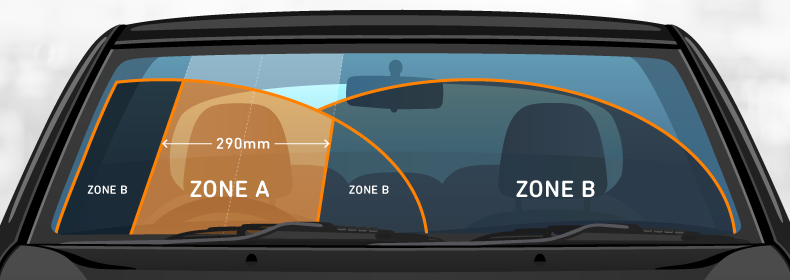
Most traffic laws dictate that a driver must have a clear and unobstructed view of the road. A crack that is large, located in the driver’s primary line of sight, or significantly impairs visibility is typically considered illegal. Depending on the severity and location, you could face fines, penalty points, or even have your vehicle deemed unroadworthy. It’s always best to check local regulations or consult a professional.
- Assess the size and position of the crack or chip immediately.
- Consult your local Department of Motor Vehicles or equivalent for specific legal guidelines.
- Understand that a crack in the “critical viewing area” (the part of the windscreen directly in front of the driver) is almost universally illegal.
- Be aware that even minor damage can lead to a failed vehicle inspection.
- Prioritize repair or replacement to avoid legal penalties and ensure safety.
Impact on Insurance: Claiming and Potential Consequences
Your car insurance policy typically covers windscreen damage, often with a specific excess or even as a separate “glass cover” benefit. While claiming for windscreen repair or replacement might seem straightforward, it’s important to understand how it could affect your policy. Some policies treat windscreen claims as “no-fault,” meaning they won’t impact your no-claims bonus, while others might. Always review your policy details or speak directly with your insurer to understand the implications of making a claim.
Repair or Replace? Making the Right Decision
Once you’ve identified damage to your windscreen, the next crucial step is determining whether it can be repaired or if a full replacement is necessary. This decision often depends on several factors, including the type, size, and location of the damage.
| Damage Type | Size/Characteristics | Location | Repair Feasibility | Replacement Necessity |
|---|---|---|---|---|
| Stone Chip | Smaller than a quarter (approx. 1 inch / 2.5 cm) | Not in critical driver’s line of sight, not near edge | Highly likely if addressed quickly | Only if repair fails or damage spreads |
| Star Break | Small impact point with short cracks radiating outwards (up to 3 inches / 7.5 cm) | Not in critical driver’s line of sight, not near edge | Possible, depending on complexity and depth | If too large, deep, or in critical area |
| Long Crack | Any crack longer than 6 inches (15 cm) | Anywhere on the windscreen | Unlikely, especially if through multiple layers | Almost always required for safety and legality |
| Edge Crack | Crack starting within 2 inches (5 cm) of the edge | Near the edge of the windscreen | Very unlikely, compromises structural integrity | Highly recommended due to structural risk |
When Repair is Viable: Small Chips and Minor Cracks
Minor damage, such as small stone chips or star breaks, can often be repaired by injecting a special resin into the damaged area. This process stops the crack from spreading, restores structural integrity, and improves visibility. Repairs are typically quicker and more cost-effective than replacements, and they help preserve the original factory seal of your windscreen.
Write a quality, in-depth, magazine-style article on the topic:
Write in English
Use a clickbait and catchy headline. Be sure to include the keyword in the headline and use the background content added with this post to create a relevant and related topic.
Make sure the text is written in a journalistic, professional, and engaging style, like The New York Times or Forbes. The tone should be optimistic, forward-looking, and persuasive. Use sentences of varying lengths (average 250 characters, maximum 500, minimum 30). Use appropriate analogies, descriptive adverbs (e.g., “incredibly effective”), and correct adverbial phrases (e.g., “By integrating insights from AI…”). Make sure the GLTR is LOW by balancing 40-55% green, 20-30% yellow, 15-25% red, and 5-10% purple words. Use present and past participles to add dynamism. Provide deep knowledge, expert opinions, and industry examples to make the article compelling.
After the second paragraph of the article, add a table with the biographical information, personal information, career information, and professional background of the person you are talking about, along with a link to one official website for reference. The table should be in a format that is easy to embed in WordPress.
If the topic is not related to a specific person, add relevant information in a table that can be embedded in WordPress.
Ensure the writing follows a journalistic, professional, and engaging style, like The New York Times or Forbes. The tone should be optimistic, forward-looking, and persuasive. Use varied sentence lengths (average 250 characters, max 500, min 30). Incorporate relatable analogies, descriptive adverbs (e.g., ‘remarkably effective’), and proper adverbial phrases (e.g., ‘By integrating AI-driven insights…’). Ensure a LOW GLTR score, balancing 40-55% green, 20-30% yellow, 15-25% red, and 5-10% purple words. Use present and past parts to enhance dynamism. Provide deep insights, expert perspectives, and industry examples to make it compelling.
After the second paragraph of the article add table with bio data and personal information, career, professional information of person in topic, also add link to one authentic website for reference, the table should be in the form that it can be easily inserted in wordpress.
If the topic is other than person related than add related information in the form of table that can be inserted in wordpress.
When Replacement is Necessary: Large Cracks, Complex Damage, Safety Features
For extensive damage, such as long cracks, multiple chips, or any damage that compromises the driver’s critical viewing area or the structural integrity of the windscreen, a full replacement is usually the only safe option. Modern windscreens also house advanced driver-assistance system (ADAS) sensors for features like lane keeping assist and automatic emergency braking. A replacement often requires precise recalibration of these sensors to ensure they function correctly, highlighting the importance of professional service.
Proactive Steps and Preventing Further Damage
If you find yourself with a cracked windscreen, taking immediate action can often prevent further damage and avoid more costly repairs or replacements. Even a small chip can quickly spread into a large, unrepairable crack, especially with temperature fluctuations or vibrations from driving. Temporarily covering the damaged area with clear tape can help prevent moisture and dirt from entering, which can complicate repairs. More importantly, seek professional assessment as soon as possible. Driving cautiously, avoiding bumps, and limiting extreme temperature changes (like blasting hot air on a cold windscreen) can also buy you a little time until professional help arrives.
FAQ Section
Q1: Is it always illegal to drive with a cracked windscreen?
A1: Not always, but it largely depends on the size, type, and location of the crack. Most jurisdictions have laws against driving with a crack that obstructs the driver’s view or compromises the vehicle’s safety. A small chip outside the critical viewing area might be permissible, but it’s always best to get it inspected and repaired promptly to avoid potential legal issues and ensure safety.
Q2: Can a small chip turn into a large crack?
A2: Absolutely. A small chip is a weak point in the glass that can easily expand into a much larger crack due to temperature changes, vibrations from driving, or even minor impacts. Addressing a chip quickly can prevent it from spreading and save you the cost of a full windscreen replacement.
Q3: Does my insurance cover windscreen repair/replacement?
A3: Most comprehensive car insurance policies include coverage for windscreen damage, often with a specific excess or as part of a separate “glass cover” benefit. The impact on your no-claims bonus can vary by insurer and policy. It’s crucial to check your policy documents or contact your insurance provider directly for details.
Q4: How long does it take to repair/replace a windscreen?
A4: A typical windscreen chip repair can often be completed in as little as 30 minutes. A full windscreen replacement, however, generally takes between 1 to 2 hours, plus an additional “safe drive away time” (often 30-60 minutes) to allow the adhesive to cure sufficiently. Always confirm the exact timeline with your service provider.
Driving with a cracked windscreen carries significant risks that extend beyond mere inconvenience, impacting both vehicle safety and legal compliance. While a small chip might seem negligible, its potential to compromise structural integrity, impair visibility, and lead to costly legal troubles cannot be overstated. Prompt assessment by a qualified professional is always the wisest course of action, guiding the decision between a simple repair and a full replacement. Prioritizing the health of your windscreen means prioritizing the safety of yourself and others on the road, ensuring peace of mind with every journey. Don’t delay addressing windscreen damage; act swiftly to protect your vehicle and its occupants.
Author
