How to Safely Tow an Automatic Car
The question of whether you can tow an automatic car safely is a common concern for many vehicle owners․ Unlike manual transmissions, automatic gearboxes rely on specific lubrication and internal mechanisms that can be easily damaged if not handled correctly during towing․ Understanding the distinctions between different transmission types and the appropriate towing methods is crucial to prevent costly repairs and ensure the longevity of your vehicle․ This comprehensive guide will explore the nuances of towing automatic vehicles, providing clear instructions and best practices to help you make informed decisions․
Understanding the Risks of Towing an Automatic Vehicle
Automatic transmissions are complex systems designed to operate with a continuous flow of lubricating fluid, known as transmission fluid․ This fluid not only lubricates internal components but also cools them and facilitates hydraulic pressure for gear changes․ When an automatic car is towed with its drive wheels on the ground and the engine off, the transmission’s internal pump, which circulates this vital fluid, does not operate․ This lack of lubrication can lead to significant friction and heat buildup within the transmission․
The Mechanism of Damage
Without the engine running, the transmission pump cannot distribute fluid․ This means that rotating parts within the transmission are starved of lubrication, leading to excessive wear․ Components like clutches, bands, and bearings can overheat rapidly, causing irreversible damage․ This is particularly true for longer distances or higher speeds, where the internal components experience prolonged friction without adequate cooling or lubrication․
Safe Methods for Towing Automatic Cars
Given the potential for damage, selecting the correct towing method for an automatic car is paramount․ There are several approaches, each with its own suitability depending on the vehicle’s drivetrain and the distance to be traveled․
The following table outlines common towing methods and their applicability for automatic vehicles:
| Towing Method | Description | Suitability for Automatic Cars | Key Considerations |
|---|---|---|---|
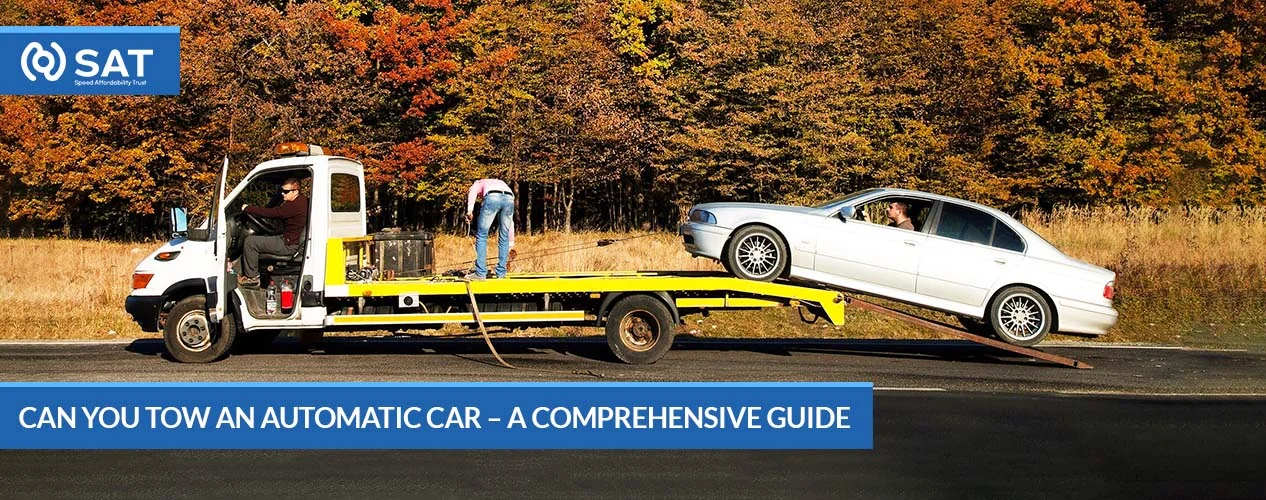
| Flatbed Towing | The entire vehicle is loaded onto a flat platform, lifting all four wheels off the ground․ | Always Recommended (Safest option for all automatic vehicles, including AWD/4WD)․ | Eliminates any risk of transmission damage as no wheels are rotating․ |
| Tow Dolly Towing | Only two of the vehicle’s wheels (typically the drive wheels) are lifted onto a small trailer, while the other two remain on the ground․ | Recommended for FWD (Front-Wheel Drive) cars, with drive wheels on the dolly․ | Not suitable for RWD or AWD unless specific precautions are taken or manufacturer guidelines permit․ |
| Four-Wheel Down Towing (Dinghy Towing) | All four wheels of the vehicle remain on the ground while being pulled by another vehicle․ | Generally NOT Recommended for most automatic cars due to transmission pump issues․ | Only permissible for a select few automatic vehicles that are specifically designed and approved by the manufacturer for this method (check owner’s manual)․ Often requires specific procedures like removing a fuse, disconnecting the drive shaft, or using a transmission lube pump․ |
| Tow Bar Towing (Rear Wheels Up) | Similar to tow dolly, but the vehicle is pulled directly by a tow bar, lifting the drive wheels off the ground․ | Recommended for RWD (Rear-Wheel Drive) cars, with drive wheels off the ground․ | Not suitable for FWD or AWD unless specific precautions are taken․ |
Preparing Your Automatic Car for Towing
Once you’ve determined the appropriate towing method, proper preparation is essential․ Follow these steps to minimize risks:
- Consult Your Owner’s Manual: This is the most critical step․ Your car’s manufacturer provides specific towing instructions and limitations for your particular model and transmission type․
- Identify Drivetrain: Determine if your car is Front-Wheel Drive (FWD), Rear-Wheel Drive (RWD), or All-Wheel Drive (AWD)/Four-Wheel Drive (4WD)․ This dictates which wheels must be off the ground․
- Check Fluid Levels: Ensure your transmission fluid is at the correct level if any wheels will be rotating during towing (though ideally, no wheels should rotate)․
- Neutral Gear: If any drive wheels are on the ground (only in very specific, manufacturer-approved scenarios for dinghy towing), the transmission might need to be in neutral․ However, simply placing it in neutral is often insufficient to prevent damage in most automatic cars․
- Secure Steering: If using a tow bar or dolly, ensure the steering wheel is unlocked (but not free to turn wildly) or secured straight, as per the tow equipment instructions․
Specific Considerations for Different Drivetrains
The type of drivetrain your automatic vehicle has plays a significant role in safe towing practices․
Front-Wheel Drive (FWD) Automatic Cars
For FWD vehicles, the front wheels are the drive wheels․ To prevent transmission damage, these wheels must be lifted off the ground․ A tow dolly is a common solution, where the front wheels are placed on the dolly․ Alternatively, flatbed towing is always the safest and most recommended option․
Write a quality, in-depth, magazine-style article on the topic:
Write in English
Use a clickbait and catchy headline. Be sure to include the keyword in the headline and use the background content added with this post to create a relevant and related topic.
Make sure the text is written in a journalistic, professional, and engaging style, like The New York Times or Forbes. The tone should be optimistic, forward-looking, and persuasive. Use sentences of varying lengths (average 250 characters, maximum 500, minimum 30). Use appropriate analogies, descriptive adverbs (e.g., “incredibly effective”), and correct adverbial phrases (e.g., “By integrating insights from AI…”). Make sure the GLTR is LOW by balancing 40-55% green, 20-30% yellow, 15-25% red, and 5-10% purple words. Use present and past participles to add dynamism. Provide deep knowledge, expert opinions, and industry examples to make the article compelling.
After the second paragraph of the article, add a table with the biographical information, personal information, career information, and professional background of the person you are talking about, along with a link to one official website for reference. The table should be in a format that is easy to embed in WordPress.
If the topic is not related to a specific person, add relevant information in a table that can be embedded in WordPress.
Ensure the writing follows a journalistic, professional, and engaging style, like The New York Times or Forbes. The tone should be optimistic, forward-looking, and persuasive. Use varied sentence lengths (average 250 characters, max 500, min 30). Incorporate relatable analogies, descriptive adverbs (e.g., ‘remarkably effective’), and proper adverbial phrases (e.g., ‘By integrating AI-driven insights…’). Ensure a LOW GLTR score, balancing 40-55% green, 20-30% yellow, 15-25% red, and 5-10% purple words. Use present and past parts to enhance dynamism. Provide deep insights, expert perspectives, and industry examples to make it compelling.
After the second paragraph of the article add table with bio data and personal information, career, professional information of person in topic, also add link to one authentic website for reference, the table should be in the form that it can be easily inserted in wordpress.
If the topic is other than person related than add related information in the form of table that can be inserted in wordpress.
Rear-Wheel Drive (RWD) Automatic Cars
With RWD cars, the rear wheels are the drive wheels․ Similar to FWD, these must be kept off the ground during towing․ This can be achieved by using a tow dolly under the rear wheels (lifting them) or a tow bar that lifts the rear․ Again, a flatbed tow truck eliminates all risks․
All-Wheel Drive (AWD) / Four-Wheel Drive (4WD) Automatic Cars
AWD and 4WD vehicles present the greatest challenge for towing, as all four wheels are typically connected to the drivetrain․ Towing these vehicles with any wheels on the ground can cause severe damage to the transmission, transfer case, or differentials․ For AWD/4WD automatic cars, flatbed towing is almost always the only safe and recommended method․ Attempting other methods without explicit manufacturer approval and specialized equipment can lead to expensive repairs․
Frequently Asked Questions About Towing Automatic Cars
Can I flat tow an automatic car with its wheels on the ground?
Generally, no․ Most automatic transmissions are not designed for flat towing (four wheels on the ground) unless explicitly stated in your owner’s manual for specific models․ Doing so can cause severe damage due to a lack of lubrication․
Is putting my automatic car in neutral sufficient for towing?
For most automatic cars, simply putting the transmission in neutral is not enough to prevent damage when towing with the drive wheels on the ground․ The transmission pump needs the engine running to circulate fluid and lubricate components․ Neutral only disengages the gears but doesn’t solve the lubrication issue․
How far can I tow an automatic car if I have to, without a flatbed?
Even for very short distances and at very low speeds (e․g․, moving it a few feet in a parking lot), there’s a risk of damage if drive wheels are on the ground․ For any significant distance, a flatbed tow is essential․ If a tow dolly is used for FWD/RWD cars, follow your manufacturer’s specific speed and distance limits, which are often very conservative․
What if my automatic car is AWD or 4WD?
For AWD and 4WD automatic cars, it is almost always mandatory to use a flatbed tow truck․ Towing with any wheels on the ground can damage the transmission, transfer case, and differentials simultaneously, leading to extremely costly repairs․
Can I use a transmission cooler during towing?
A transmission cooler only helps dissipate heat when the fluid is circulating, which requires the engine to be running․ It won’t prevent damage if the transmission pump isn’t active during towing with the engine off․
Towing an automatic car requires careful consideration and adherence to proper procedures to avoid expensive damage․ While it might seem convenient to use simpler towing methods, the mechanical integrity of your automatic transmission is at stake․ Prioritizing a flatbed tow is always the safest and most recommended approach for any automatic vehicle, especially those with AWD or 4WD systems․ Always consult your vehicle’s owner’s manual for specific instructions and, when in doubt, rely on professional towing services․ Making an informed decision will protect your investment and ensure your vehicle remains in optimal condition for years to come․
Author
