Mastering Tronscan Basics: How to Verify Any Wallet, TXID, and Smart Contract in Minutes
Mastering On-Chain Verification on the Tron Network
Navigating distributed ledgers requires reliable tools for auditing balances and confirming transfer states. Performing a quick tronscan check provides instant clarity when verifying high-value digital operations. Modern decentralized finance relies heavily on complete transparency across public nodes. Anyone can review real-time balances, historical operational logs, and smart contract parameter details without requesting central permission. Security researchers emphasize that daily verification habits dramatically reduce the risk of falling victim to deceptive decentralized applications.
Navigating Public Explorer Architecture
Public ledgers record every interaction within permanent cryptographic structures. When users send digital assets across the network, specialized search portals parse raw blocks to display clear settlement data. Accessing Tronscan allows network participants to inspect vital wallet statistics within seconds. The primary search bar functions as an entry point for querying addresses, block numbers, and unique settlement keys.
Fact: Public block explorers do not store your private keys or manage assets; they simply serve as readable graphical windows into the underlying distributed database.
Understanding these public tools enhances overall operational safety. Instead of relying on third-party screenshots or unverified text messages, traders confirm settlements directly through distributed nodes. Detailed ledger views display precise gas consumption, energy usage, and exact block timestamps.
Verifying Wallet Addresses and TXID Data
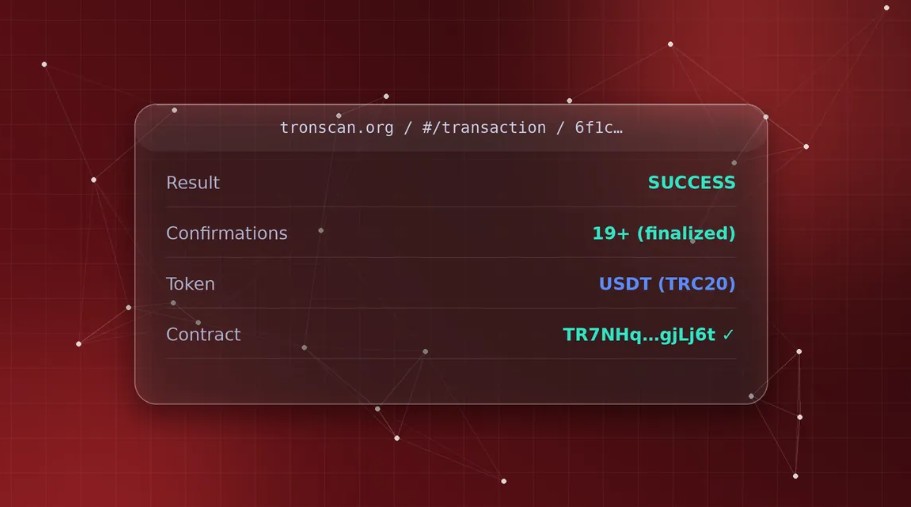
Checking an account state begins with pasting a valid public key into the search field. The interface immediately aggregates incoming and outgoing transfers, current token balances, and active resource allocations. Examining a transaction hash, often called a TXID, proves whether a transfer has successfully achieved finality on the network.
Key elements to verify during any ledger investigation include:
- The exact destination address format to prevent address-poisoning schemes.
- The total amount of transferred tokens matching expected agreement terms.
- The current execution status showing confirmed network consensus.
- The specific contract call signature for automated token interactions.
Carefully analyzing these details prevents common user errors. Misspelled destination keys or fraudulent tokens often reveal themselves upon close inspection of public records. Utilizing Tronscan ensures that users can cross-reference token contract addresses against official developer documentations.
Smart Contract Code Audits
Automated program execution forms the backbone of decentralized ecosystems. Before interacting with unfamiliar protocols, inspecting source code integrity is paramount. Unverified contracts may contain hidden backdoors or dangerous administrative functions capable of draining user funds.
Fact: A verified smart contract displays its complete human-readable source code directly on the block explorer, matching the compiled bytecode deployed on the ledger.
When reviewing decentralized applications on Tronscan, check for green verification badges indicating validated source code. Validated contracts allow users to read specific execution rules, owner permissions, and token distribution limits directly from the portal interface.
Author