Can You Drive Your Car After an MOT Failure
The annual MOT test is a crucial assessment that ensures vehicles on UK roads meet essential safety and environmental standards. Many drivers approach this test with a degree of apprehension‚ often wondering what the immediate consequences are if their vehicle doesn’t pass muster. A common and pressing question that arises after receiving a dreaded ‘fail’ certificate is whether it is still permissible to drive the car. Understanding the rules surrounding MOT failures is paramount for every motorist‚ not only to avoid legal penalties but also to ensure road safety for themselves and others.
Understanding the MOT Failure and Its Immediate Implications
An MOT failure indicates that your vehicle has one or more defects that deem it unroadworthy according to current regulations. These defects are categorised as ‘minor‚’ ‘major‚’ or ‘dangerous.’ While minor defects are typically advisories that you should address‚ major and dangerous defects will result in an outright failure‚ preventing your car from legally being on the road for general use. It is critical to grasp the specific nature of your vehicle’s failure‚ as this dictates your subsequent actions and legal standing.
The Legalities of Driving a Failed Vehicle
The law is very clear on when you can and cannot drive a car that has failed its MOT. In most cases‚ if your MOT has expired and your car fails‚ it is illegal to drive it on public roads. However‚ there are specific‚ limited exceptions to this rule‚ primarily concerning the journey to and from repairs or a retest.
- Permitted Driving Scenarios:
- You may drive your vehicle to a pre-arranged appointment for repairs to fix the MOT failures.
- You may drive it to a pre-booked MOT retest at an approved test centre.
- In both cases‚ your vehicle must be roadworthy enough not to pose a danger to anyone.
- Prohibited Driving Scenarios:
- You cannot drive your car for general use‚ such as commuting‚ shopping‚ or leisure‚ after an MOT failure.
- If your vehicle has been issued with a ‘dangerous’ defect notice‚ it is illegal to drive it on public roads under any circumstances‚ even to a garage for repairs‚ until the dangerous fault has been rectified. Driving with a dangerous defect is a serious offence.
Penalties for non-compliance can be severe‚ including fines of up to £2‚500‚ penalty points on your licence‚ and even driving disqualification. Furthermore‚ driving without a valid MOT can invalidate your car insurance‚ leading to even greater financial and legal repercussions.
Steps to Take After an MOT Failure
Receiving an MOT fail certificate can be disheartening‚ but it’s important to act promptly and correctly. Here are the essential steps you should take:
- Review the MOT Certificate: Carefully examine the ‘refusal of an MOT test certificate’ (VT30). This document lists all the defects and their categories (minor‚ major‚ or dangerous).
- Understand the Defects: Differentiate between advisories (minor faults that passed but need attention) and actual failures (major or dangerous faults). Dangerous faults require immediate attention and prohibit driving.
- Plan for Repairs: Get quotes for the necessary repairs. Prioritise major and dangerous defects immediately‚ as these are what prevent your car from passing.
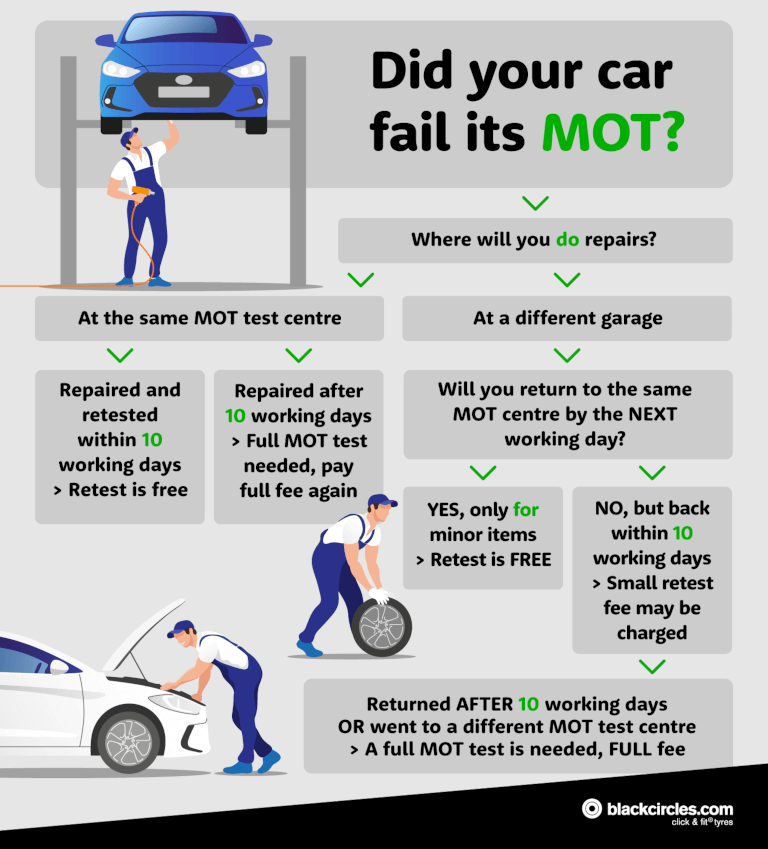
- Arrange a Retest: Once repairs are completed‚ book a retest. If you get your vehicle repaired and retested at the same test centre within 10 working days‚ a partial retest is often free or charged at a reduced rate.
Finding a Reputable Repair Centre
Choosing the right garage for repairs is crucial. Look for mechanics who are certified and have a good reputation. It’s always wise to obtain multiple quotes for the repair work‚ ensuring transparency and fair pricing. Remember‚ you are not obligated to have the repairs done at the same garage that conducted the MOT test. However‚ if you choose a different garage‚ be sure they understand the specific requirements for the retest.
The MOT Retest Process
After the necessary repairs are completed‚ your vehicle must undergo a retest. The type of retest depends on when and where the repairs were carried out.
- Free Retest (Partial): If your car is left at the original test centre for repairs and retested within 10 working days‚ or if you return it to the same centre within one working day for certain minor repairs (like windscreen wipers or mirrors)‚ the retest is free.
- Reduced Fee Retest (Partial): If you take your car away for repairs and return it to the original test centre within 10 working days‚ they can perform a partial retest‚ focusing only on the previously failed items. A reduced fee may apply.
- Full Retest: If you return your car after 10 working days or take it to a different test centre‚ a full MOT test will be required‚ incurring the standard fee.
Common Reasons for MOT Failure
Many components are checked during an MOT‚ and understanding common failure points can help you prepare.
- Lighting and Signalling: Faulty bulbs‚ incorrect aim‚ or damaged lenses are frequent culprits.
- Tyres: Insufficient tread depth‚ cuts‚ bulges‚ or incorrect tyre pressure often lead to failure.
- Brakes: Worn pads or discs‚ uneven braking‚ or fluid leaks are serious concerns.
- Suspension: Worn shock absorbers‚ damaged springs‚ or corroded components can cause instability.
- Visibility: Damaged windscreens‚ faulty wipers‚ or obstructed views are common issues.
- Exhaust Emissions: Excessive emissions are a growing reason for failure‚ particularly for older vehicles.
Frequently Asked Questions About Driving a Car After an MOT Failure
Q: Can I drive my car home after an MOT failure?
A: Yes‚ if your previous MOT is still valid and the failure isn’t due to a ‘dangerous’ defect‚ you can drive it home or to a place for repairs. However‚ if your MOT has expired‚ you can only drive it to a pre-booked repair appointment or retest‚ provided it doesn’t have a dangerous defect.
Q: What if my car has “dangerous” defects?
A: If your car fails due to a ‘dangerous’ defect‚ it is illegal to drive it on public roads under any circumstances‚ even to a garage. You must arrange for it to be towed or transported for repairs. Driving with a dangerous defect carries severe penalties.
Q: How long do I have to get a retest?
A: You generally have 10 working days to get a retest at the original test centre for a partial retest. If you exceed this period‚ or go to a different test centre‚ a full MOT test will be required.
Q: Can I drive my car with an expired MOT if it passed previously but now has a new failure?
A: No. Once your car fails an MOT‚ the failure overrides any previously valid MOT certificate‚ especially if the previous MOT has expired. You can only drive it under the specific exceptions (to a pre-booked repair or retest) and only if it doesn’t have a dangerous defect.
Q: What’s the difference between ‘major’ and ‘dangerous’ defects?
A: ‘Major’ defects are issues that could affect the vehicle’s safety‚ impact the environment‚ or fail to meet other test requirements. ‘Dangerous’ defects pose an immediate and direct risk to road safety or have a serious environmental impact. A dangerous defect means the vehicle must not be driven until repaired.
| Scenario | MOT Status | Defect Type | Legality of Driving | Action Required |
|---|---|---|---|---|
| Driving for general use | Failed (expired MOT) | Major or Dangerous | Illegal | Arrange repairs and retest‚ or transport vehicle. |
| Driving to pre-booked repair | Failed (expired MOT) | Major | Permissible (if roadworthy) | Ensure repair appointment is booked‚ drive direct. |
| Driving to pre-booked retest | Failed (expired MOT) | Major | Permissible (if roadworthy) | Ensure retest appointment is booked‚ drive direct. |
| Driving with a dangerous defect | Failed (any MOT status) | Dangerous | Illegal under all circumstances | Do not drive; arrange for towing/transportation. |
| Driving with a previous valid MOT | Failed (valid MOT) | Major | Permissible (but get repairs done ASAP) | You can drive until the previous MOT expires‚ but serious defects should be fixed immediately. |
Navigating the aftermath of an MOT failure requires careful attention to legal requirements and a strong commitment to safety. While it might be tempting to ignore the issues‚ understanding the strict regulations concerning driving a car after it fails its MOT is essential for every motorist. Always prioritise safety and adherence to the law to avoid severe penalties and ensure the well-being of everyone on the road. Getting necessary repairs done promptly and arranging a retest within the stipulated timeframe will ensure your vehicle is compliant and safe for continued use. Remember‚ an MOT is not just a bureaucratic hurdle; it’s a vital safety check designed to protect you and others.
Author
