Understanding the Capitalization Rate in Real Estate
Understanding the capitalization rate, commonly known as the cap rate, is fundamental for any astute real estate investor evaluating potential acquisitions. This crucial metric offers a snapshot of a property’s potential profitability relative to its purchase price, providing a standardized way to compare different investment opportunities. However, the concept of a “good” cap rate is far from universal; it is a nuanced figure heavily influenced by a multitude of factors, including market conditions, property type, and the inherent risks associated with an investment. Delving into these variables is essential to accurately assess whether a particular cap rate aligns with your investment objectives and risk tolerance.
What is the Capitalization Rate for Real Estate Investments?
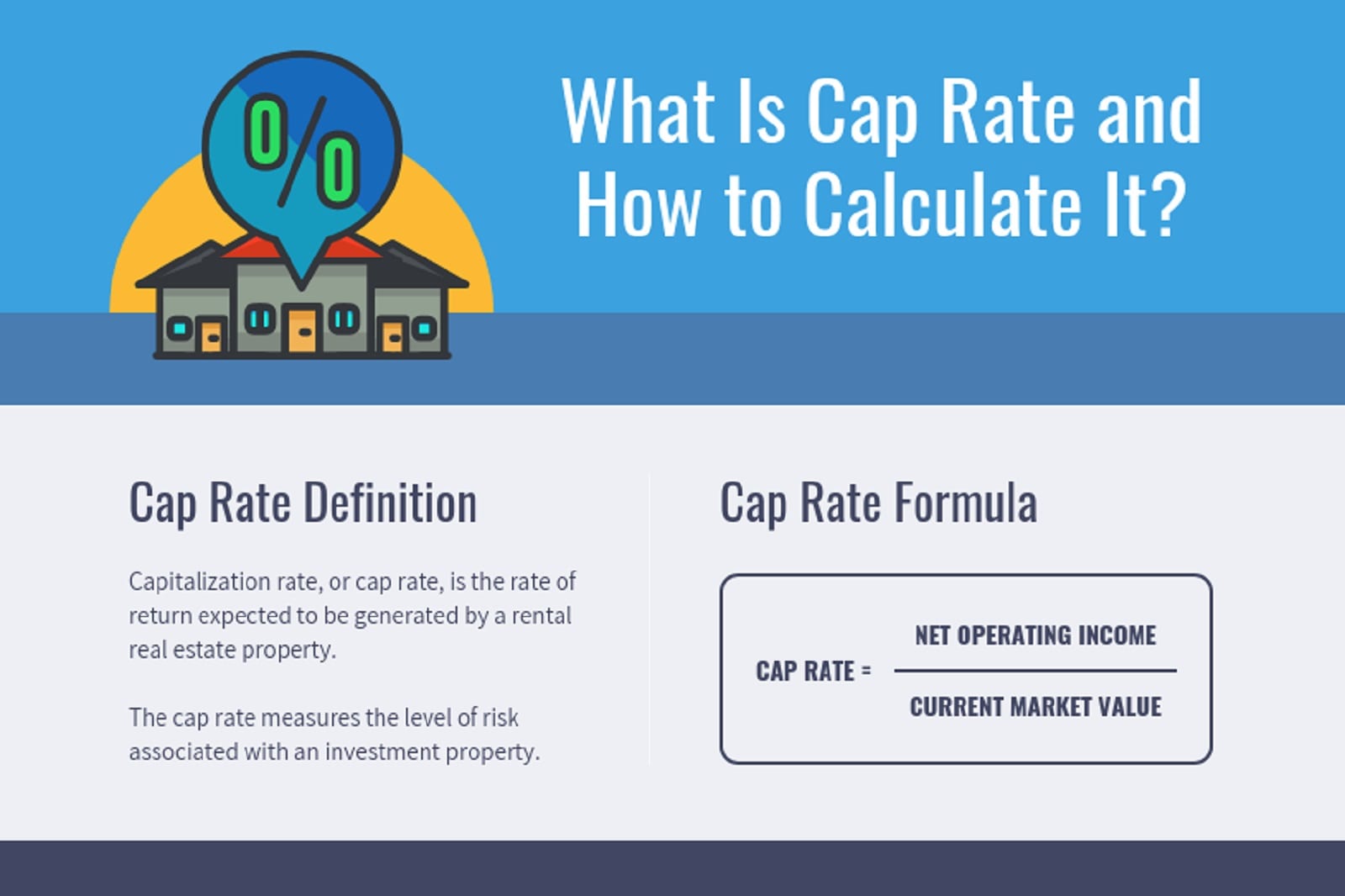
The capitalization rate is a ratio that helps investors estimate the potential return on an investment property. It essentially measures the rate of return on a real estate investment property based on its expected net operating income. This simple calculation provides a quick method for comparing the relative value of similar properties without factoring in debt financing.
The formula for calculating the cap rate is straightforward:
Cap Rate = Net Operating Income (NOI) / Property ValueNet Operating Income (NOI) is the annual income generated by an income-producing property after accounting for all operating expenses, but before debt service and income taxes. Operating expenses typically include property taxes, insurance, management fees, utilities, and maintenance costs.
Factors Influencing a “Good” Cap Rate
Defining a “good” cap rate is subjective and depends heavily on context. There isn’t a single magic number that applies across all investment scenarios. Several key factors dictate what constitutes an acceptable or desirable cap rate:
- Market Conditions: Cap rates tend to be lower in stable, high-demand, low-risk markets (e.g., major metropolitan areas with strong economies) because properties there are perceived as safer investments with consistent appreciation. Conversely, emerging markets or those with higher perceived risk often exhibit higher cap rates to attract investors.
- Property Type: Different types of properties inherently carry different risk profiles and income stability. For instance, a multi-family apartment building might command a lower cap rate than a specialized industrial facility, reflecting its perceived lower risk and more stable tenant base.
- Property Condition and Age: Newer, well-maintained properties typically have lower cap rates due to lower immediate capital expenditure requirements and greater appeal. Older properties, or those requiring significant renovations, might show higher cap rates to compensate for the additional investment and risk.
- Lease Terms and Tenant Quality: Properties with long-term leases to creditworthy tenants (e.g., a national chain store) generally have lower cap rates because the income stream is more secure. Shorter leases or less reliable tenants increase risk, pushing cap rates higher.
- Interest Rates: Cap rates often move inversely with interest rates. When interest rates are low, borrowing is cheaper, which can drive property values up and cap rates down. Higher interest rates can make financing more expensive, potentially decreasing property values and increasing cap rates.
Interpreting Cap Rates: High vs. Low and What It Means for Your Investment
Understanding the implications of high versus low cap rates is crucial for making informed investment decisions. Each has distinct advantages and disadvantages depending on an investor’s strategy.
Generally, a lower cap rate indicates a lower-risk, more stable investment, often in a prime location with strong growth potential. Investors seeking long-term appreciation and consistent, albeit potentially smaller, returns might prefer properties with lower cap rates. These properties are typically found in strong, established markets and tend to hold their value well.
Conversely, a higher cap rate often signifies a higher-risk investment, perhaps in a less stable market, a property requiring significant improvements, or one with a less secure income stream. While higher cap rates promise a potentially greater immediate return on investment, they also come with increased uncertainty and operational challenges. Value-add investors who are willing to take on more risk and actively manage properties to improve their value often target these types of opportunities.
To illustrate the typical ranges, consider the following general guidelines for various investment property types:
| Property Type | Typical Cap Rate Range (Approx.) | Risk Profile |
|---|---|---|
| Class A Multi-Family (Prime) | 3.5% ⎻ 5;5% | Lower Risk / Stable |
| Class B Multi-Family (Secondary) | 5.0% ― 7.0% | Moderate Risk |
| Retail (National Tenant) | 4.0% ⎻ 6.5% | Lower to Moderate Risk |
| Office (Prime Location) | 4.5% ⎻ 7.0% | Moderate Risk |
| Industrial / Warehouse | 5.5% ― 8.0% | Moderate to Higher Risk |
| Hospitality (Hotels) | 7.0% ⎻ 10.0%+ | Higher Risk / Volatile |
Evaluating Your Investment Property’s Potential Cap Rate
When assessing a property, it’s not enough to simply know the cap rate; you must evaluate it within its proper context. Here’s a numbered list of steps to consider:
- Research Local Market Cap Rates: Compare the property’s cap rate to those of recently sold, comparable properties in the same submarket. This provides a baseline for what is considered “normal.”
- Analyze Property-Specific Risks: Consider the age and condition of the property, tenant stability, lease terms, and potential for future capital expenditures. Higher risks warrant higher cap rates.
- Assess Growth Potential: Evaluate the likelihood of rental income growth and property value appreciation. Properties with strong growth prospects might justify a lower initial cap rate.
- Align with Investment Strategy: Determine if the cap rate aligns with your personal investment goals, whether you prioritize immediate cash flow, long-term appreciation, or value-add opportunities.
- Consider Alternative Metrics: While vital, the cap rate is just one tool. Also, consider cash-on-cash return, internal rate of return (IRR), and debt service coverage ratio (DSCR) for a comprehensive analysis.
Frequently Asked Questions (FAQ) About Cap Rates
Write a quality, in-depth, magazine-style article on the topic:
Write in English
Use a clickbait and catchy headline. Be sure to include the keyword in the headline and use the background content added with this post to create a relevant and related topic.
Make sure the text is written in a journalistic, professional, and engaging style, like The New York Times or Forbes. The tone should be optimistic, forward-looking, and persuasive. Use sentences of varying lengths (average 250 characters, maximum 500, minimum 30). Use appropriate analogies, descriptive adverbs (e.g., “incredibly effective”), and correct adverbial phrases (e.g., “By integrating insights from AI…”). Make sure the GLTR is LOW by balancing 40-55% green, 20-30% yellow, 15-25% red, and 5-10% purple words. Use present and past participles to add dynamism. Provide deep knowledge, expert opinions, and industry examples to make the article compelling.
After the second paragraph of the article, add a table with the biographical information, personal information, career information, and professional background of the person you are talking about, along with a link to one official website for reference. The table should be in a format that is easy to embed in WordPress.
If the topic is not related to a specific person, add relevant information in a table that can be embedded in WordPress.
Ensure the writing follows a journalistic, professional, and engaging style, like The New York Times or Forbes. The tone should be optimistic, forward-looking, and persuasive. Use varied sentence lengths (average 250 characters, max 500, min 30). Incorporate relatable analogies, descriptive adverbs (e.g., ‘remarkably effective’), and proper adverbial phrases (e.g., ‘By integrating AI-driven insights…’). Ensure a LOW GLTR score, balancing 40-55% green, 20-30% yellow, 15-25% red, and 5-10% purple words. Use present and past parts to enhance dynamism. Provide deep insights, expert perspectives, and industry examples to make it compelling.
After the second paragraph of the article add table with bio data and personal information, career, professional information of person in topic, also add link to one authentic website for reference, the table should be in the form that it can be easily inserted in wordpress.
If the topic is other than person related than add related information in the form of table that can be inserted in wordpress.
Q: Is a higher cap rate always better for an investment property?
A: Not necessarily. While a higher cap rate indicates a potentially higher immediate return, it often comes with increased risk, a less desirable location, or a property that requires significant improvements. Investors must balance potential returns with their risk tolerance and investment strategy.
Q: Does the cap rate include financing costs or debt service?
A: No, the capitalization rate is calculated using Net Operating Income (NOI), which is a pre-debt metric. It does not account for mortgage payments, interest expenses, or other financing costs. This allows for an “all-cash” comparison of properties.
Q: How does inflation affect cap rates?
A: Inflation can have a complex impact. In an inflationary environment, rental income might increase, which could boost NOI and potentially cap rates if property values don’t rise proportionally. However, rising interest rates, often a response to inflation, can put downward pressure on property values and upward pressure on cap rates as investors demand higher returns for their capital.
Q: Can cap rates be negative?
A: Theoretically, if a property’s operating expenses exceed its rental income, resulting in a negative Net Operating Income (NOI), the cap rate would be negative. However, such a property would typically not be considered a viable investment for income generation unless there’s significant value-add potential or land speculation involved.
The capitalization rate is an indispensable metric for anyone looking to invest in real estate, offering a quick yet powerful glimpse into a property’s income-generating potential. However, simply identifying a high or low cap rate is insufficient; true understanding comes from interpreting this figure within its proper market and property context. A “good” cap rate is ultimately one that aligns with an investor’s specific objectives, risk appetite, and strategic vision for their portfolio. Always conduct thorough due diligence, compare against similar properties, and consider all relevant market dynamics to make an informed investment decision. The cap rate serves as an excellent starting point, but a holistic analysis ensures long-term success in the dynamic world of real estate investment.
Author
