how to get rid of old kitchen knives
Every culinary enthusiast or home cook eventually faces the dilemma of what to do with worn-out, dull, or broken kitchen knives. These essential tools, while incredibly useful in their prime, can become a significant hazard if not handled and disposed of correctly once their utility diminishes. Ensuring proper disposal isn’t just about clearing out clutter; it’s fundamentally about safety—for yourself, waste handlers, and the environment. This comprehensive guide will walk you through various responsible methods for getting rid of old kitchen knives, ensuring a safe transition from your kitchen to their final resting place.
Why Proper Knife Disposal is Absolutely Crucial
Discarding old kitchen knives might seem like a trivial task, but it carries considerable implications. An improperly discarded knife poses immediate physical risks and can also have environmental consequences. Understanding these factors underscores the importance of a thoughtful approach;
The Dangers of Improper Knife Disposal
The primary concern with old knives is their potential to cause injury. Sharp edges, even on dull blades, can easily pierce through trash bags, leading to cuts for anyone handling the waste. This includes sanitation workers, family members, or even pets rummaging through bins. Furthermore, sharp objects can damage recycling machinery, creating costly repairs and potential safety risks for workers at recycling facilities. Beyond immediate dangers, knives, especially those made of various materials, need to be processed correctly to minimize landfill waste and maximize material recovery.
Safe Methods for Disposing of Old Kitchen Knives
Fortunately, there are several responsible ways to get rid of your old kitchen knives, ranging from repurposing to specialized recycling. Your choice will depend on the knife’s condition and local regulations.
Option 1: Donating or Repurposing Usable Knives
If your knives are merely dull but otherwise in good condition, they might still have life left in them. Consider options that give them a new purpose or a new home.
- Local Charities: Some charities or shelters accept kitchenware donations, especially if the knives are still functional after sharpening. Always call ahead to confirm their policy.
- Culinary Schools: Beginner culinary students might benefit from slightly used but still effective tools.
- Metal Artists/Craftsmen: Artists might be interested in older blades for sculptures or other creative projects.
- Gardening Tools: A dull knife can be repurposed for light gardening tasks, like cutting twine or opening soil bags.
- Scraping Tools: Once completely dull and safe, they can be used for non-cutting tasks around the house.
Option 2: Recycling Metal Knives Properly
For knives that are truly beyond use, recycling the metal is often the most environmentally friendly option. Not all curbside recycling programs accept sharp objects, so this usually requires a trip to a specialized facility.
- Clean the Knife: Thoroughly wash and dry the knife to remove any food residue.
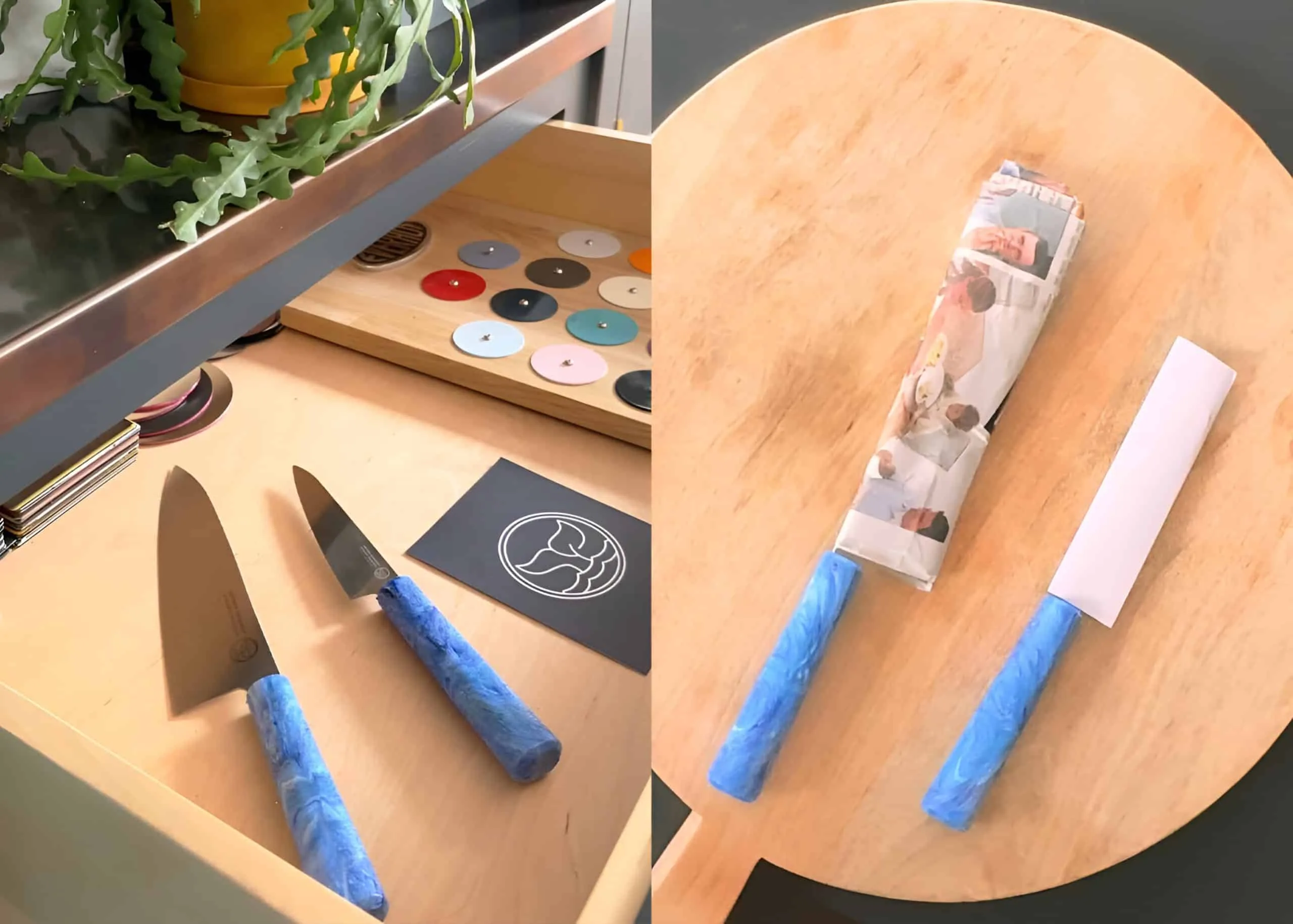
- Secure the Blade: Wrap the blade tightly with several layers of cardboard or newspaper. Use strong tape (duct tape is ideal) to secure the wrapping firmly. Ensure no part of the blade is exposed.
- Label Clearly: Write “CAUTION: SHARP OBJECT” or “DANGER: KNIFE” on the wrapped package.
- Check Local Recycling: Contact your local waste management facility or a metal scrap yard. Many accept sharp metal objects for recycling, but they need to be prepared safely. Some areas have specific drop-off points for hazardous waste or sharp objects.
- Professional Sharpeners: Some knife sharpening services or kitchen supply stores offer take-back programs or advice on local recycling options.
Option 3: Disposing in Household Trash (As a Last Resort)
If recycling or donation isn’t feasible, disposing of a knife in your regular household trash should be considered a last resort, undertaken with extreme caution. The goal is to make the knife as safe as possible for waste handlers.
Here’s a comparison of common disposal methods:
| Disposal Method | Pros | Cons | Best For |
|---|---|---|---|
| Donation/Repurposing | Eco-friendly, gives items new life, supports community. | Requires knives to be in usable condition; not all places accept. | Dull but otherwise intact knives; creative projects. |
| Metal Recycling | Environmentally responsible, recovers valuable materials. | Requires preparation and often a trip to a specific facility. | Severely damaged or broken metal knives. |
| Household Trash | Convenient (if properly secured). | Risk of injury if not securely wrapped; contributes to landfill. | Ceramic knives (often not recyclable); last resort for metal knives. |
Essential Safety Precautions Before Disposal
Regardless of the method you choose, safety should always be your top priority. Always handle old knives with immense care, as even a seemingly dull blade can still cut.
- Wear Protective Gloves: Heavy-duty work gloves can offer an extra layer of protection.
- Wrap Blades Thoroughly: Use multiple layers of sturdy material like cardboard, old towels, or thick newspaper. Secure it with strong tape.
- Use a Puncture-Proof Container: For trash disposal, place the securely wrapped knife inside a rigid, puncture-proof container like an old plastic detergent bottle or a sturdy cardboard box before putting it into the trash bag.
- Label Clearly: Always mark the container or package with a clear warning about the sharp object inside.
- Never Throw Loose: Under no circumstances should you ever throw a loose, unwrapped knife directly into any bin.
Frequently Asked Questions About Knife Disposal
Q1: Can I just throw knives in the regular trash?
A1: While technically possible as a last resort, it is highly discouraged unless the knife is meticulously secured in a puncture-proof container and clearly labeled. Improper disposal poses a significant risk of injury to waste handlers.
Q2: What about ceramic knives? Are they recyclable?
A2: Ceramic knives are generally not recyclable through standard metal recycling programs due to their material composition. They should be wrapped extremely carefully (as described for metal knives) and disposed of in the regular trash, preferably within a hard, puncture-proof container.
Q3: Where can I find local recycling centers that accept sharp objects?
A3: Check your municipal waste management website, contact your local public works department, or use online search tools for “metal scrap yards” or “hazardous waste disposal” in your area. Some hardware stores or kitchen supply shops might also offer guidance or take-back programs.
Q4: Should I sharpen knives before donating them?
Write a quality, in-depth, magazine-style article on the topic:
Write in English
Use a clickbait and catchy headline. Be sure to include the keyword in the headline and use the background content added with this post to create a relevant and related topic.
Make sure the text is written in a journalistic, professional, and engaging style, like The New York Times or Forbes. The tone should be optimistic, forward-looking, and persuasive. Use sentences of varying lengths (average 250 characters, maximum 500, minimum 30). Use appropriate analogies, descriptive adverbs (e.g., “incredibly effective”), and correct adverbial phrases (e.g., “By integrating insights from AI…”). Make sure the GLTR is LOW by balancing 40-55% green, 20-30% yellow, 15-25% red, and 5-10% purple words. Use present and past participles to add dynamism. Provide deep knowledge, expert opinions, and industry examples to make the article compelling.
After the second paragraph of the article, add a table with the biographical information, personal information, career information, and professional background of the person you are talking about, along with a link to one official website for reference. The table should be in a format that is easy to embed in WordPress.
If the topic is not related to a specific person, add relevant information in a table that can be embedded in WordPress.
Ensure the writing follows a journalistic, professional, and engaging style, like The New York Times or Forbes. The tone should be optimistic, forward-looking, and persuasive. Use varied sentence lengths (average 250 characters, max 500, min 30). Incorporate relatable analogies, descriptive adverbs (e.g., ‘remarkably effective’), and proper adverbial phrases (e.g., ‘By integrating AI-driven insights…’). Ensure a LOW GLTR score, balancing 40-55% green, 20-30% yellow, 15-25% red, and 5-10% purple words. Use present and past parts to enhance dynamism. Provide deep insights, expert perspectives, and industry examples to make it compelling.
After the second paragraph of the article add table with bio data and personal information, career, professional information of person in topic, also add link to one authentic website for reference, the table should be in the form that it can be easily inserted in wordpress.
If the topic is other than person related than add related information in the form of table that can be inserted in wordpress.
A4: It’s generally a good idea to sharpen knives before donating them, as this makes them more appealing and immediately usable for the recipient. However, if you are unsure how to safely sharpen them, simply ensure they are clean and in otherwise good condition, and let the recipient handle the sharpening.
Disposing of old kitchen knives responsibly is a straightforward process once you know the correct steps to take. Prioritizing safety through careful wrapping and containment is paramount, safeguarding both yourself and those who handle waste. Exploring options like donation or metal recycling helps minimize environmental impact and gives materials a second life. By following these guidelines, you can ensure that your old kitchen tools are removed from your home in a manner that is both secure and environmentally conscious. Make the choice to dispose of your kitchen knives thoughtfully, protecting everyone involved in the process.
Author
